Savitha Shri B and Zhai Mo Shine with tactical brilliance while fast classical debut sparks excitement.
Linares was one of the strongest chess tournaments in the world from the late 1980s through the 2000s, attracting Garry Kasparov, Anatoly Karpov, and many other elite players.
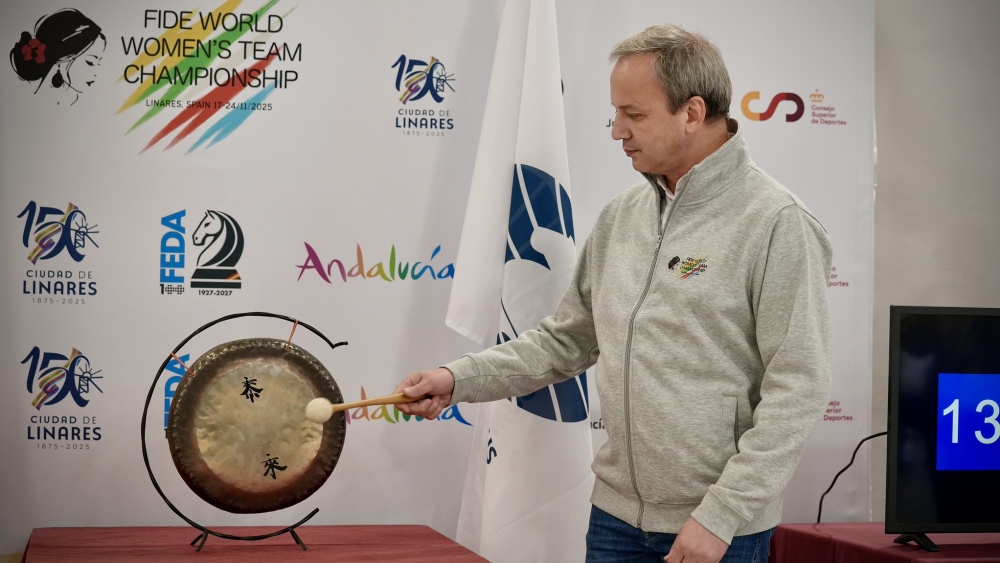
At the start of each round of the Super-Tournament a large ceremonial gong was struck by a guest of honour to officially begin play.
This ritual became one of Linares’s most memorable trademarks. It originated as part of the organizers’ effort to give the event a distinctive identity and elevate it to true world-class status.

FIDE President Arkady Dvorkovich and FIDE Deputy President – and former five-time World Champion – Viswanathan Anand opened both rounds of the 2025 FIDE Women’s World Team Championship, reviving one of the most recognisable symbols of that earlier era.
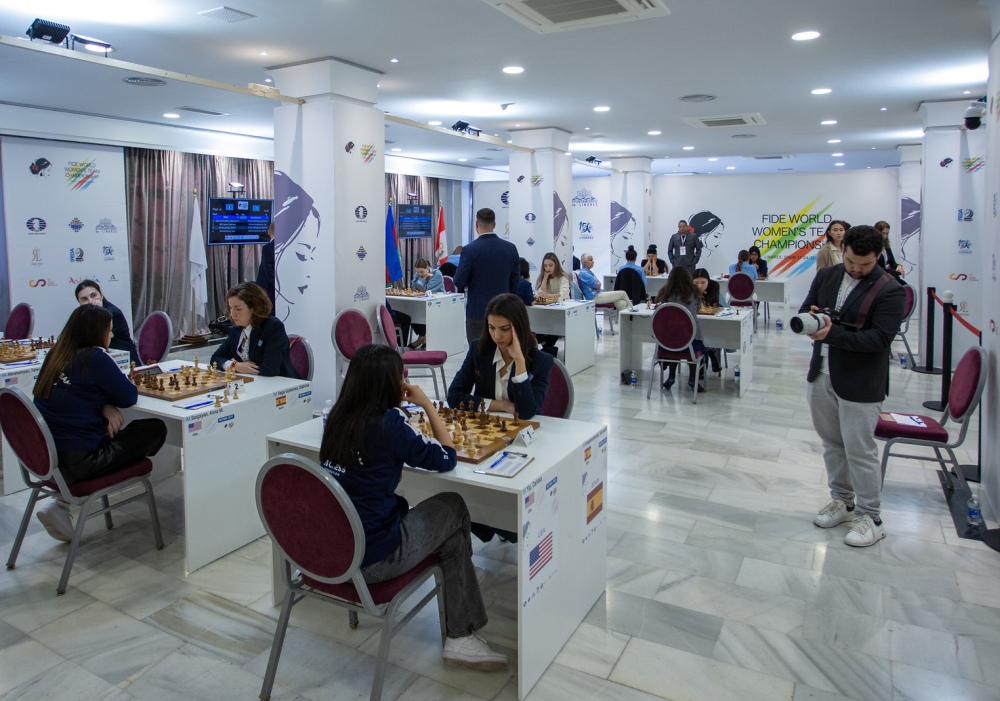
Each of the two pools in the event, A and B, features six teams that face one another in a round-robin format over five rounds. The top four teams from each pool will advance to the knockout stage, beginning with the quarterfinals.

Most of today’s matches – played with the debuting 45 + 30 “fast classical” time control – were dominated by the rating favourites, though several encounters were decided by narrow 2.5–1.5 margins.
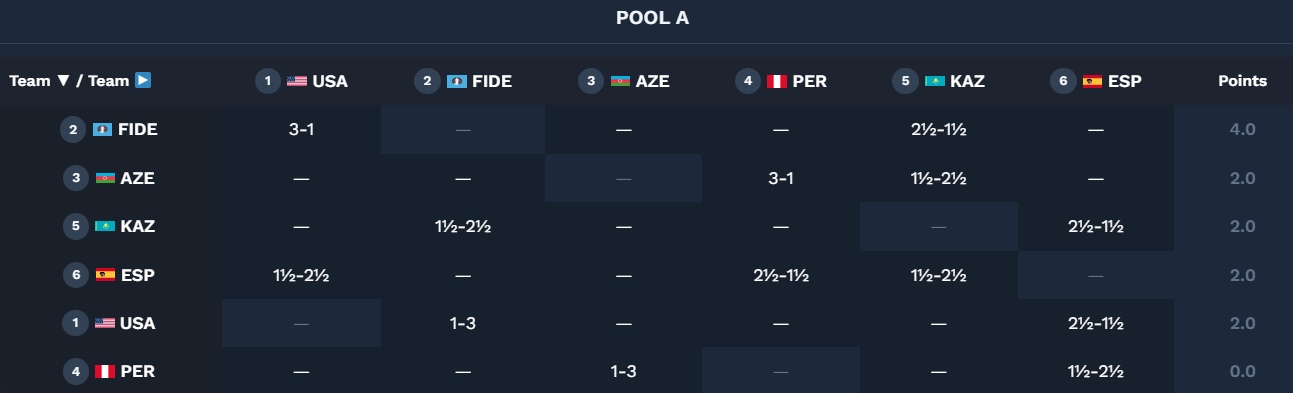
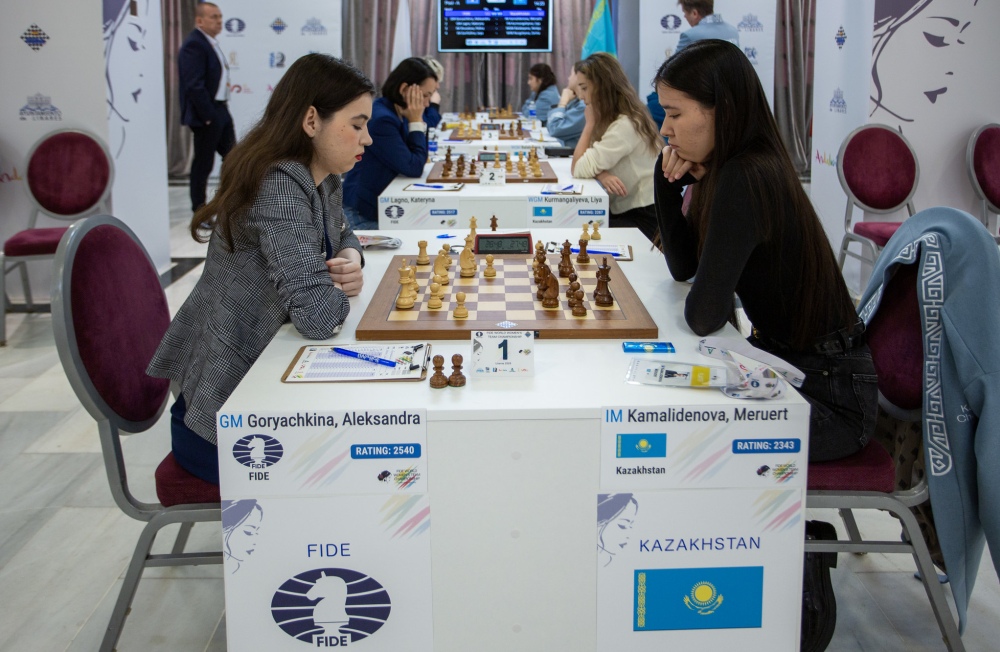
After the first two rounds, Team FIDE has taken a commanding lead in Pool A, scoring convincing victories over the USA and Kazakhstan, while four teams sit just behind on 50%.

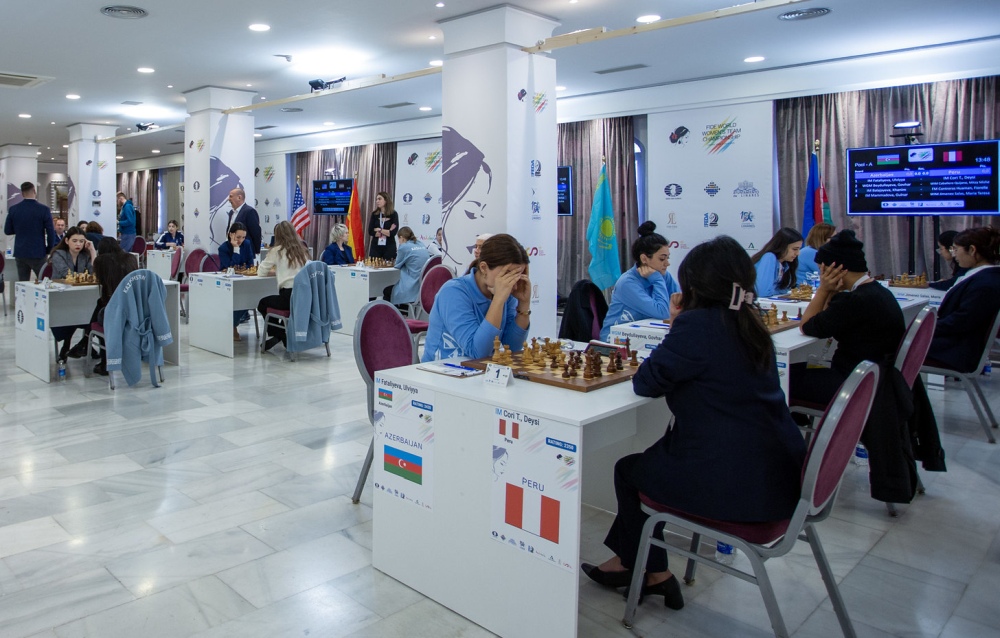
Peru currently trails the group after losing both of today’s matches, against Azerbaijan and Spain, though not without putting up a resilient fight.
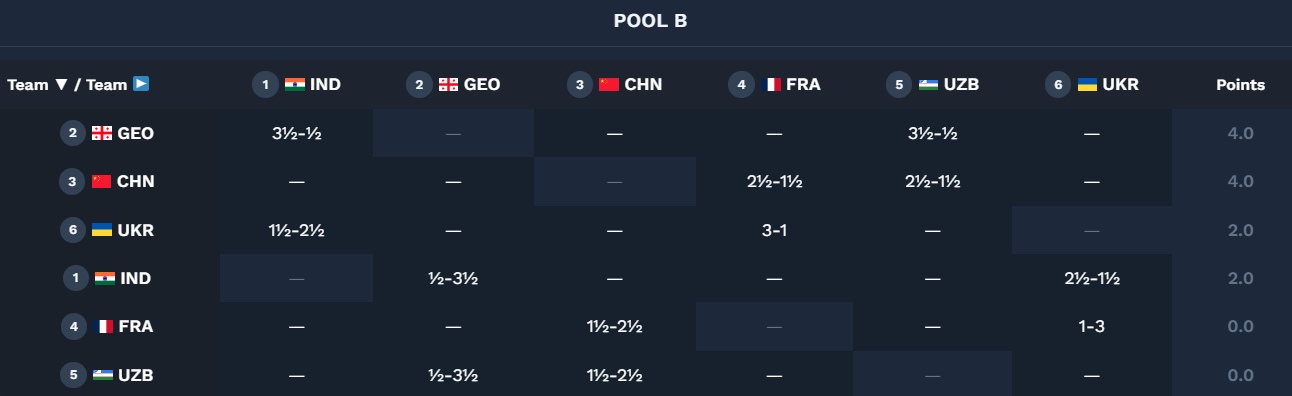
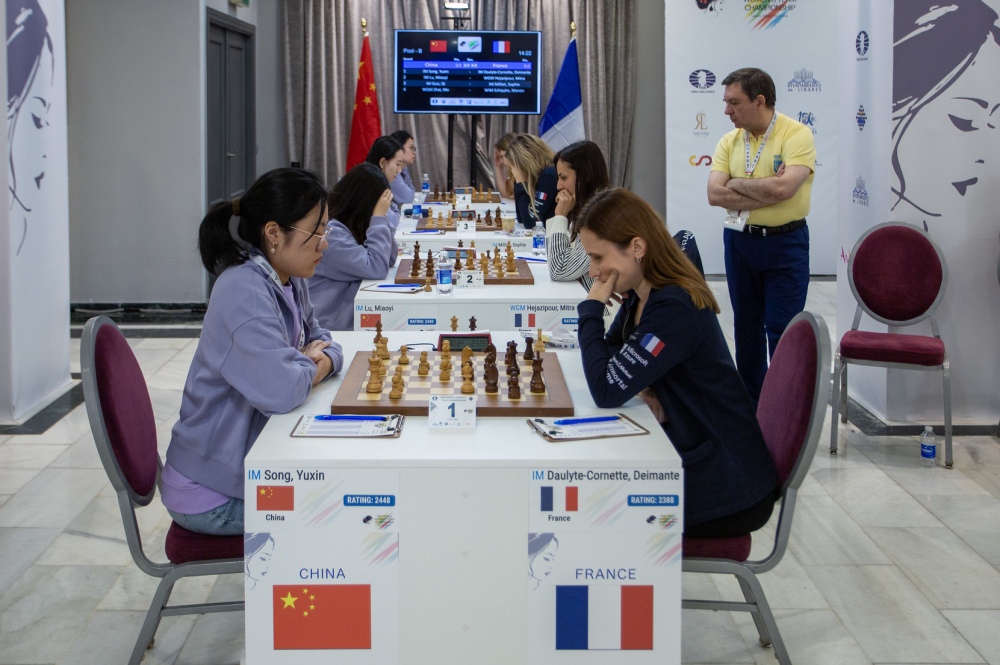
On the other side of the hall, Pool B is led by China – playing without GM Hou Yifan – and Georgia, with India and Ukraine close behind. Great excitement is expected on day two, as rounds three and four are likely to determine the fate of several teams.

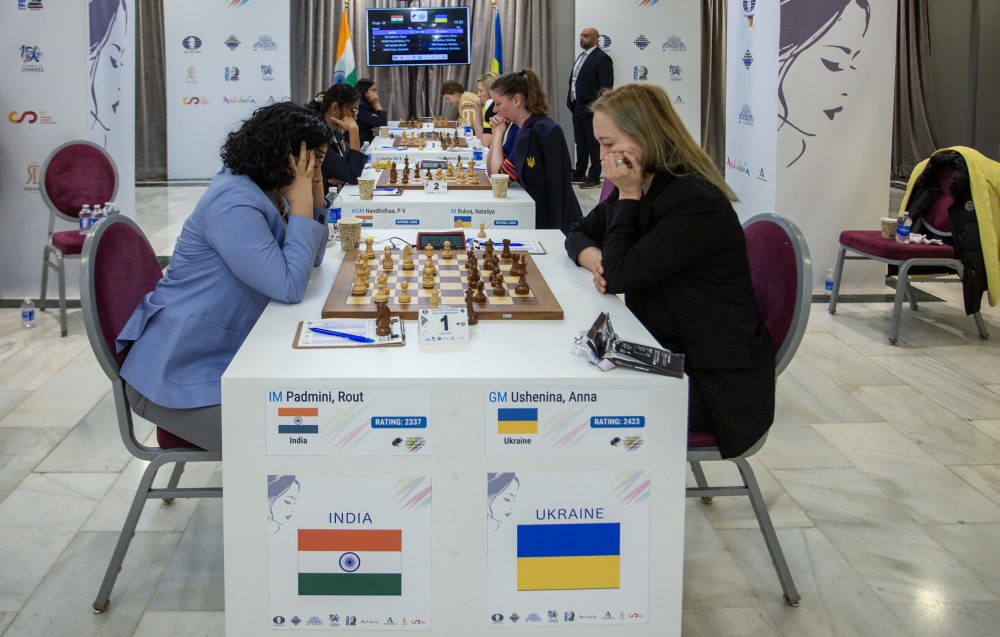
One of the relative surprises of the day came in round one, where India defeated Ukraine despite being outrated by nearly 100 points. Although the current Olympic champions did not travel with their top lineup, they still field a young, cohesive, and ambitious team capable of challenging any opponent.

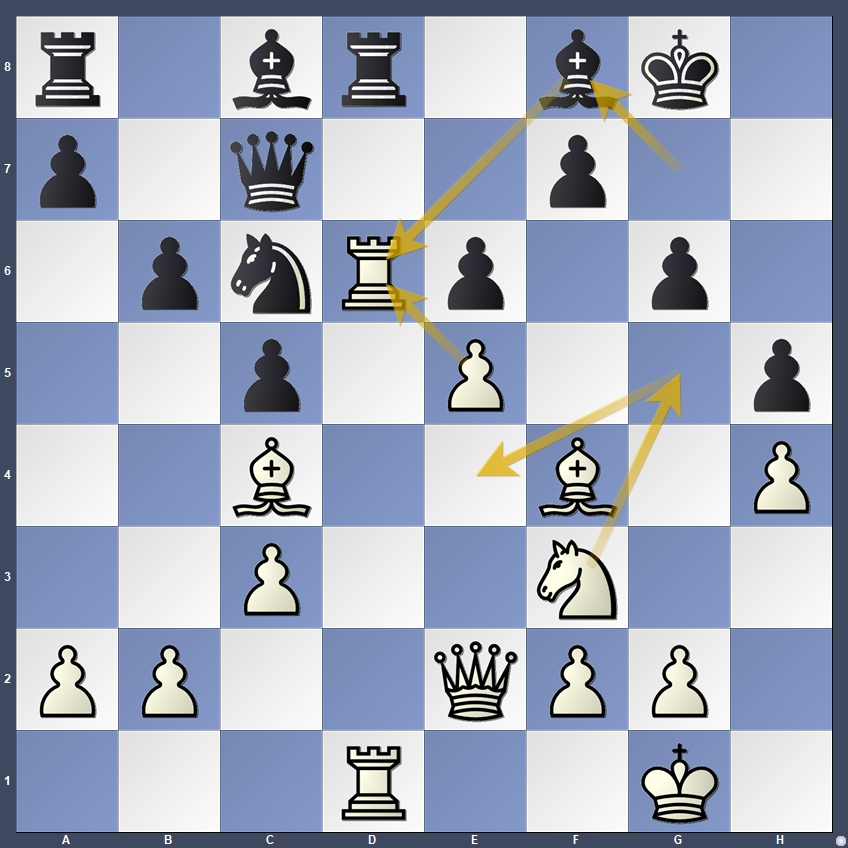
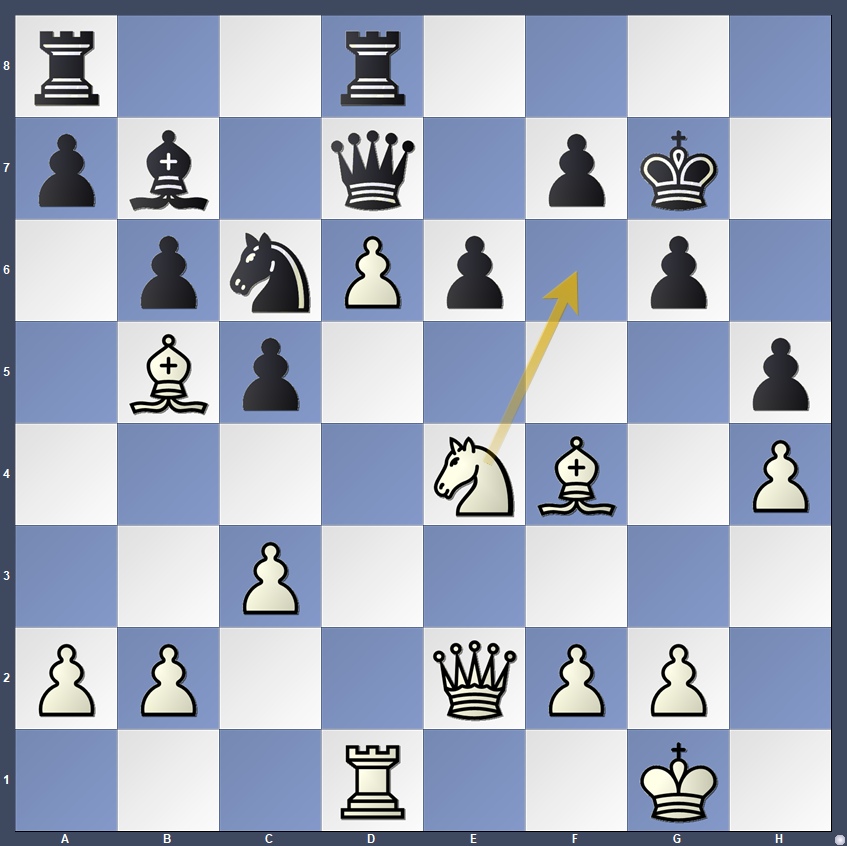
On board three, IM Savitha Shri B (2319), playing White, controlled her game against GM Natalia Zhukova (2322) from early on, steadily building pressure on the kingside. Savitha is one of the brightest rising stars in Indian women’s chess, already progressing rapidly through high-level norms.
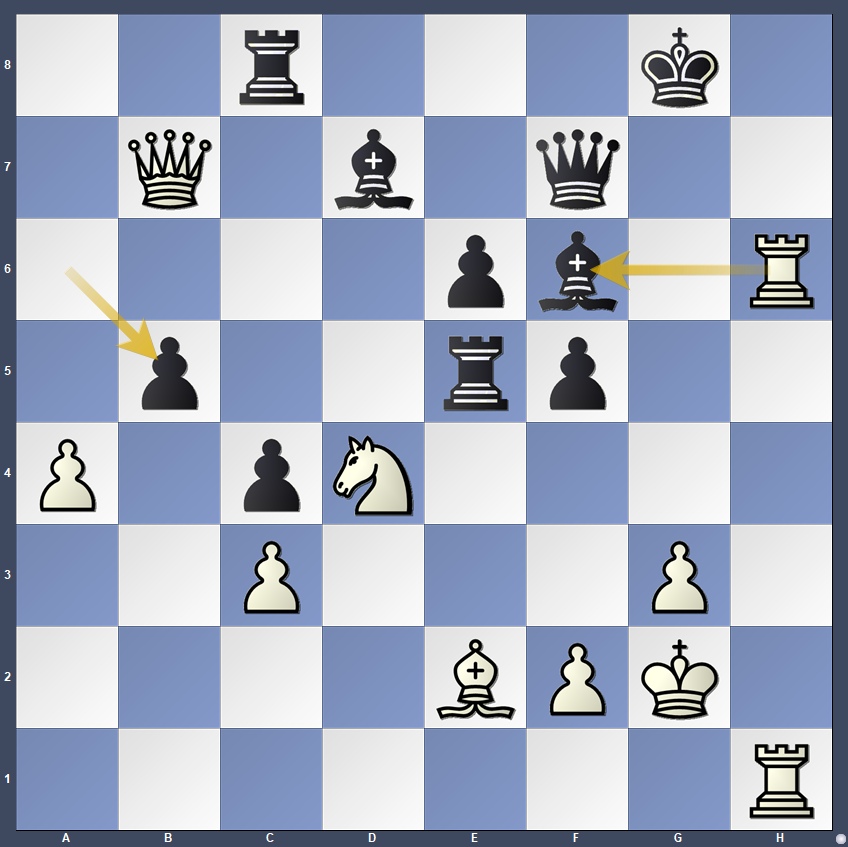
Although White had several winning continuations, the Indian player struck decisively with 34.Rxf6!, tearing apart Black’s defensive structure. Zhukova replied with 34…Bc6+ (as 34…Qxf6 loses immediately to 35.Qxd7), but after 35.Qxc6! Rxc6 36.Rxf7, the former two-time European Women’s Champion had no choice but to resign. A clean and elegant tactical finish.
Team captain GM Swayams Mishra and two of the players from the match later joined me in the interview area for a brief post-game assessment of their performance and of the new “fast classical” time control making its debut at this event.